






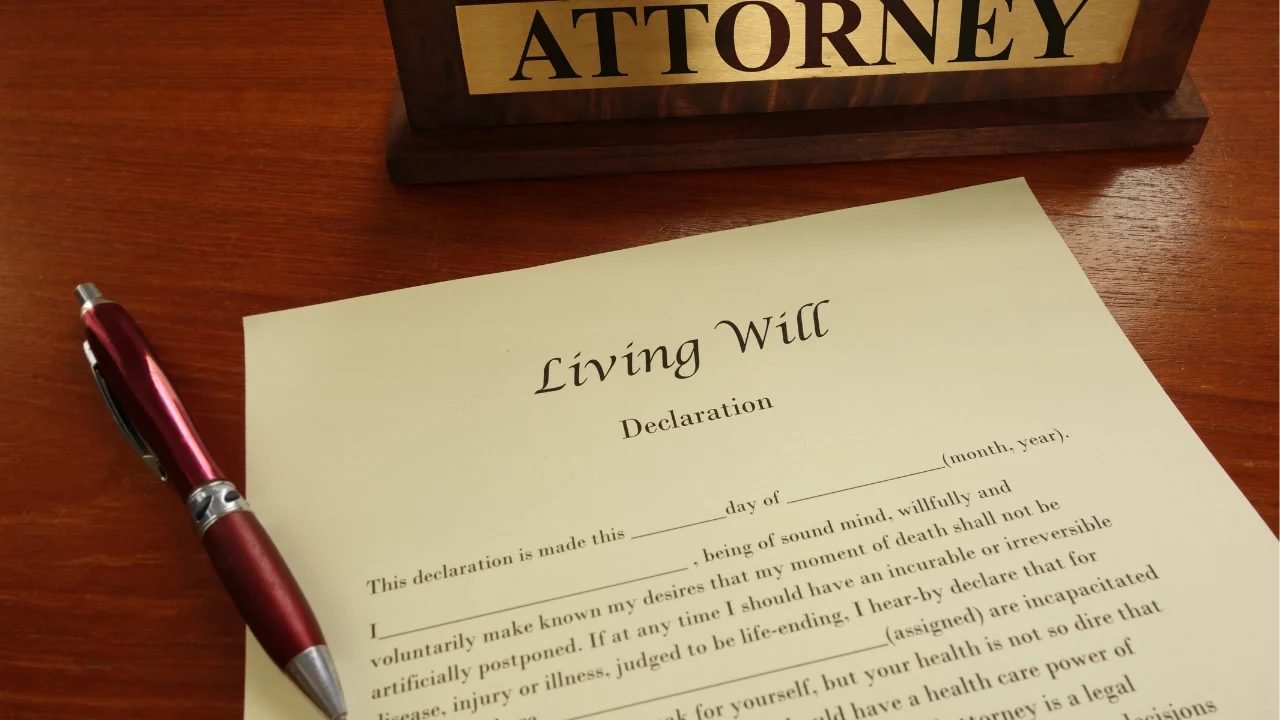
You may have heard of or experienced firsthand that your family or friends have been faced with or suffered from the fact that you did not have a living will or last will and testament, resulting in a caregiver, doctor or someone else decides about your medical treatment instead of you yourself. Your assets will also not be dealt with according to your wishes. This often happens when you become unconscious due to illness or accident, and to avoid this happening, here are some important things you need to know.
What is a Living Will? A living will, also referred to as a “healthcare directive” or “advance directive,” is a legal document that allows you to make your end-of-life wishes known to those responsible for your healthcare. It is used to make sure that the people responsible for your medical care know how you would like to be cared for in the event that you become unable to express or communicate your wishes yourself.
What do you mean end-of-life wishes? End-of-life wishes is a term used to describe your desires for the treatment and care you would like to receive during the last stages of life.
What is the difference between a Living Will and Last Will & Testament? A last will & testament is used to inform others of how you would like your assets to be distributed following your death. A living will, on the other hand, informs others how you would like to be cared for while you are still alive and facing the possibility of death but unable to speak for yourself. A last will & testament becomes enforceable upon death. A living will on the other hands ends and is no longer enforceable upon death. It is only in effect while you are living; thus, it is called a “living” will.
Does a POA allow someone else to speak on my behalf? Yes, but usually not regarding matters of healthcare. A Power of Attorney allows someone to speak on your behalf regarding financial and legal matters. It does not cover end-of-life wishes unless it includes a Living Will.
Why should you have a Living Will? A living will does not take away your ability to act on specific end-of-life matters. If you have a living will, you are still free to express your healthcare wishes at that time. You still have the right to make decisions about your medical care and treatments. However, if you become mentally or physically incapacitated and unable to act for yourself, without a living will, no one will know what decisions you would like made surrounding your care. Your loved ones or doctors may be placed in the difficult position of make life-changing or life-ending decisions without truly knowing what your wishes would have been.
If I don’t have an illness or health concern, do I really need to create a Living Will? (When should you create a POA?) Even if you do not have an illness or serious health concern, having a living will can act as a safeguard for unexpected events that may cause life-sustaining measures, such as CPR, to be needed.
So you’ve decided that you want to create a Living Will, what should you do? The best way to make sure that you have a Living Will that you understand and that addresses all your end-of-life wishes is to have it drafted and executed by an attorney. Having an attorney facilitate the process for you can help to ensure you have confidence in the care that will be provided to you during the last stages of life. An attorney can advise you on all the factors you should consider when determining your end-of-life wishes.
If you are looking for an attorney to assist you with your Living Will, please contact Central Jersey Legal Services, Inc. at (732) 249-7600.
For more information on our services visit: https://centraljerseylegalservices.org/.
Central Jersey Legal Services (CJLS) provides free civil legal assistance to low-income families and seniors. If you have landlord-tenant disputes, domestic violence, social welfare, consumer issues, etc., please call 732-249-7600. We have Chinese-speaking staff at your service.